At RIT, learning about wine and beer means studying more than what is poured into a glass. Wines of the World I (HSPT-161) and Beers of the World (HSPT-160), offered through Saunders College of Business (SCB), introduce students to the history, production and appreciation of beverages from around the globe. Open to students of all majors, these courses offer a broad introduction to beverage culture, history, production and appreciation of beverages from around the globe.
A glass of wine can become a geography lesson before the first sip. In Wines of the World, students examine its color, identify its aromas and consider how climate and cultivation shape its character. The tasting becomes an exercise in paying attention.
Although housed within hospitality education, the courses’ appeal extends beyond students preparing for careers in restaurants or hotels. According to Edwin Torres Areizaga, Ph.D., chair of RIT’s Hospitality and Tourism Management Department, interest from students across campus has helped the courses grow.
Torres said the department offers two sections of each course per semester, with staffing and capacity constraining further expansion. Behind that demand is a curriculum connecting familiar products to the agricultural, cultural and commercial systems that produce them.
An Education in Attention
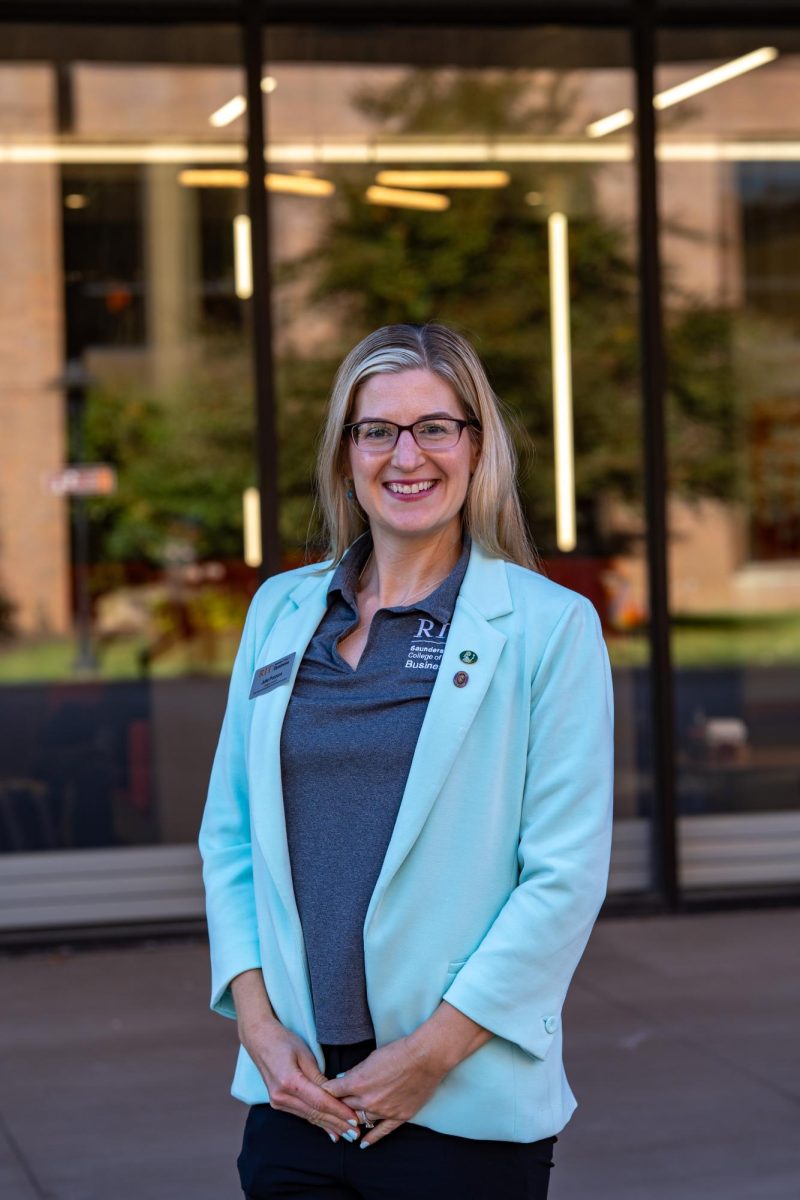
Julie Purpura, a visiting lecturer in the Hospitality and Tourism Management Department within SCB brings experience in restaurants, wine education and professional wine certification to her classroom. An RIT alumna and certified sommelier, she first discovered her interest in wine through the courses she now teaches.
Purpura describes her teaching philosophy as “edutainment.” Enjoyment is part of the experience, alongside lectures, notes and exams.
“There is content,” Purpura said. “My philosophy is edutainment, so I really want students to enjoy the class and have a great time. But I also do expect that you learn and are following along.”
In her Wines of the World sections, a typical session begins with the region under discussion. Students review maps and take notes before tasting approximately six wines selected to illustrate characteristic grapes, styles or production methods. A class might explore New York’s wines, while another examines Australia and New Zealand. The tasting follows a deliberate sequence. Students look at a wine against a backdrop, swirl it and identify several aromas before considering its flavor and structure. Acidity, sweetness, tannins, alcohol and body become qualities they learn to distinguish and describe.
That vocabulary gives students a framework for articulating sensations that might otherwise remain vague. A mouthwatering sensation offers a clue about acidity; the drying sensation associated with tannins provides another point of comparison. Beers of the World offers a parallel exploration of another beverage tradition. According to RIT’s course description, students study brewing history, production, distribution, flavor characteristics, food pairings and serving techniques.
Tastings compare beers from major brewing centers with similar styles produced in other countries. Torres emphasized that sampling serves an educational purpose. Small pours allow students to compare beverages and connect their impressions to the material being taught. Student lab assistants help with pouring and other classroom tasks, while tasting kits and a workbook support the wine course’s practical work.
Geography, Agriculture and Cultural Memory
Professor Purpura introduces students to “terroir,” a French term describing the relationship between a wine and the place its grapes are grown. Soil, climate and growing conditions help explain why wines develop different characteristics. Viticulture, the cultivation of grapes, grounds that conversation in agriculture.
“Viticulture is basically the farming of the grapes,” Purpura said. “It’s agriculture at its core.”
Weather also complicates the idea that a beverage is a uniform product. Purpura discusses vintage variation: how the conditions of a particular growing year influence a wine’s style and quality. Rainfall and summer temperatures give students concrete examples of the relationship between farming and what eventually reaches the glass.
Production adds another layer. In explaining fermentation, Purpura connects sugar and yeast to the formation of alcohol and carbon dioxide. A session devoted to sparkling wines allows students to compare how different production methods contribute to the finished beverage.History provides context for those technical distinctions. Purpura discusses how migration, regional traditions and disruptions such as Prohibition shaped wine production. Food pairings offer another way to examine the relationship between local agriculture and cultural practice.
“We talk a lot about what grows together, goes together,” Purpura said. “You have to think before you go to the grocery store and get whatever you want.”
That connection encourages students to consider how foods and wines from the same region developed alongside one another, becoming part of shared culinary traditions. The curriculum also responds to changes in the industry. Purpura said sustainability, climate change and the inclusion of additional wine regions influence what she covers each semester.
A Classroom That Changed a Career
For Purpura, the significance of these courses is personal. She enrolled in the wine classes during her junior and senior years at RIT. Studying with Lorraine Hems, her wine instructor at the university, and meeting guest speakers introduced her to a field she had not previously envisioned pursuing.
“I really did fall head over heels in love with the wine industry,” Purpura said.
She later earned a master’s degree in education and developed a wine program at Jefferson Community College in Watertown, N.Y. Her subsequent training included wine certifications and qualification as a certified sommelier through the Court of Master Sommeliers. Returning to RIT as a lecturer brought her back to the classroom experience that helped redirect her ambitions.
That trajectory informs her emphasis on keeping an open mind. She encourages students to recognize connections between beverages and fields such as engineering, finance, marketing and packaging. Decisions about bottles, cans, labels and sustainability reveal how many disciplines contribute to a single product.
Developing Discernment
Learning to evaluate wine also means examining assumptions about price and preference. Purpura discusses how labor, production scale and harvesting methods influence cost, challenging the idea that a more expensive bottle necessarily offers a better experience.
Personal preference presents a different question. Students may encounter a wine whose aroma suggests sweetness, only to discover that it tastes dry. Others may revise an earlier conviction that they enjoy only one category of wine.
Purpura encourages students to distinguish their own preferences from judgments about quality. Disliking a style does not automatically make it a defective wine; learning to describe that distinction is part of developing discernment. For Purpura, that understanding can translate into confidence beyond the classroom, whether students are navigating a restaurant’s wine list or sharing what they have learned with family. When asked what she hopes students will remember five years later, she returned to the sensory attention at the heart of the course.
“To use their senses when appreciating beverages, and feel confident in their tasting profile wherever they go in the world,” Purpura said.