Earlier this fall, RIT announced a new doctoral occupational therapy (OT) program in the College of Health Sciences and Technology (CHST). The program — RIT’s first clinical doctorate on campus — will be available beginning in the spring 2027 semester. The new degree will combine health care and technology to teach students a variety of innovative therapeutic techniques.
Early OT practices were meant to improve physical and mental health through crafts, workshops and productive work. Presently, the practice is focused on improving day-to-day life for individuals recovering from an illness or injury, as well as those with disabilities. Occupational therapists find ways to make daily tasks easier for people following a setback, studying patients’ limitations and adapting accordingly. Chris Alterio, program director and a clinical professor of occupational therapy, shared a desire for a more holistic OT program.
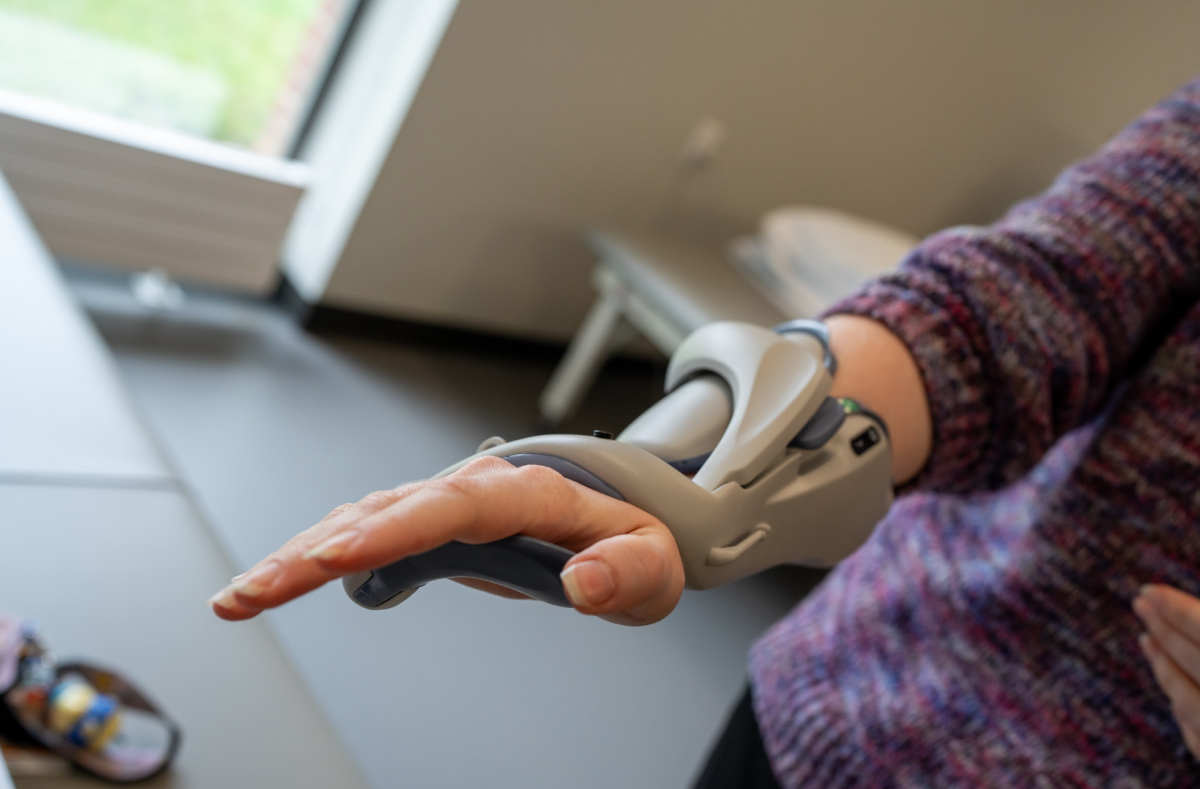
“My hope for the program is that we are looking at people in their totality,” Alterio said. The new doctorate will incorporate RIT’s virtual reality and 3D printing technology into occupational therapy. With VR programs now available for shopping, driving and lifting, the university is now in a unique position to provide practice in real-world scenarios. Alterio described the program as “a 21st-century, cutting-edge rehab science program.” Having this program at RIT opens up these doors to mesh already available and thriving technology with rehabilitation. The program will not just use physical therapy like lifting weights, but also use technology to stimulate movement.
RIT has made great investments in this program over the past two and half years; about two months ago, part of the 175 Jefferson Road building was transformed into a clinical lab, pediatrics lab, a makerspace and more.
The OT curriculum includes courses in anatomy, psychology, medical sciences and neuroanatomy. After completing these courses, students will apply their knowledge to rehabilitation through hands-on fieldwork activities and construct a capstone project in a field of their choice.
This program is not exclusively tailored to CHST students; RIT encourages engineering and computing students to join the OT program. “We’re hoping a lot of internal students will be interested — engineers, computer science students,” Alterio said. Additionally, students in engineering and computing typically possess the skills needed to develop technology-based approaches to occupational therapy. Program administration is eager to find students interested in applying their technological skills to help others. The program offers an early assurance pathway enabling current students to apply for an available spot after they graduate. Matriculated students will be provided with an advisor to assist in their college journey, continuously providing program updates and helping students stay on track with prerequisites.
While CHST is currently the second smallest college on campus by population — with only 617 total students this academic year — it is simultaneously one of RIT’s fastest growing colleges according to the fall student enrollment trends. Occupational therapy may only be the beginning; RIT is actively discussing plans to open up more allied health and rehabilitation programs within CHST in the future. “I’m just so impressed with our students and the kinds of stuff our students are doing. You guys are just awesome; that’s how I know our program is going to be successful,” Alterio said.