Nepal-Tibet Flood — What We Know One Month Later
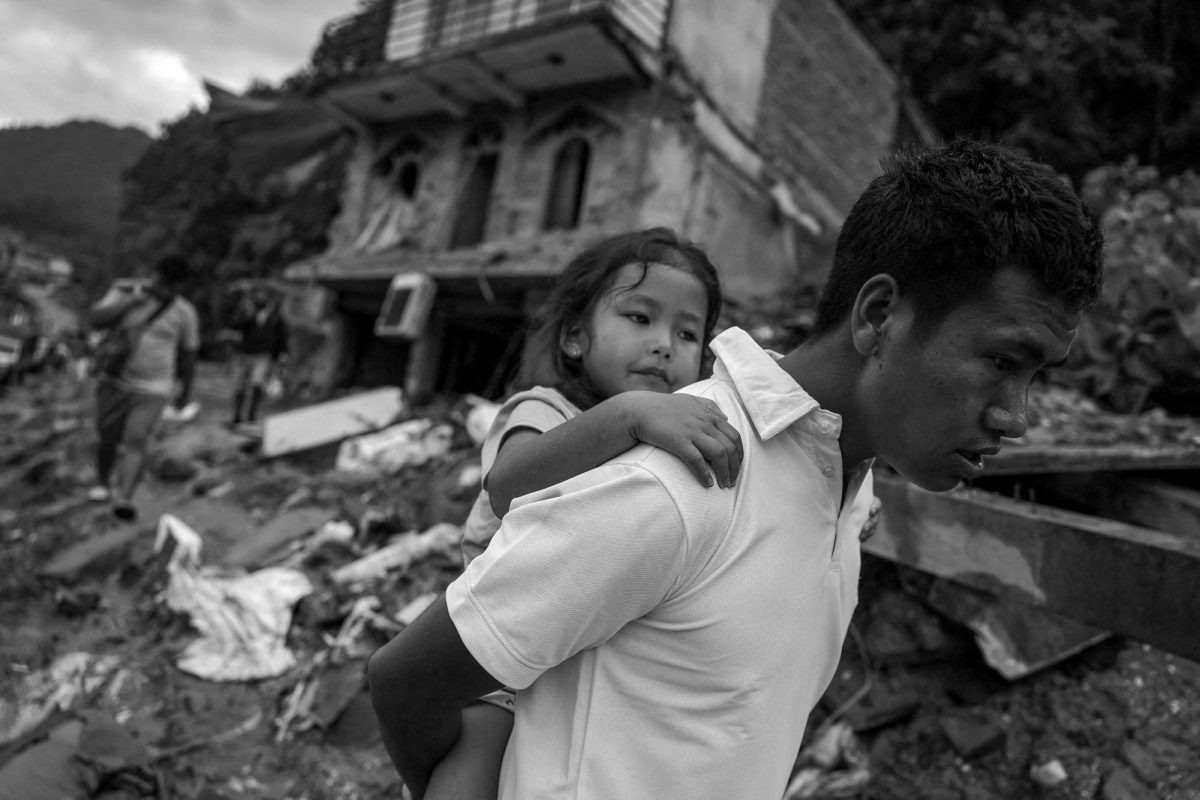
Along the Nepal-Tibet border, over 1,300 have died and 5,500 remain missing after extensive flash flooding on Aug. 26. Climate experts at the International Center for Integrated Mountain Development in Nepal stated water levels on the Trishuli River rose by 27 feet in half an hour. Victims of the disaster include over 30 nationalities, most likely visiting on religious pilgrimages.
The flooding was likely caused by mountainous glaciers, which melted due to environmental imbalances from global warming. Those investigating the incident warn of effects of climate change on less-developed areas, as they tend to suffer more from industrialization despite contributing less than their highly-industrialized counterparts.
The high-tech flood detection systems that could have reduced the severity of the incident are nonexistent in the area due to lack of available funding. The cost of rebuilding from this disaster is crippling the nation: authorities have already estimated $2.56 billion in damages, and some estimates put the full cost at $4-5 billion. Nepal’s annual government budget is about $14 billion.
Rescue and recovery efforts are ongoing, and casualty numbers continue to climb as the one-month anniversary of the disaster passes.
Old Games, New Policies
The United States White House recently released a new official webpage — arcade.gov — featuring a collection of retro-arcade-style games designed to promote the Trump administration’s policies and reach younger generations through online gameplay. The games are redesigns of classic arcade games such as “Snake” — now “Rio Run” — in which the player does “border patrol along the Rio Grande.” One game, “Build the Wall,” styled after Tetris, encouraged players to “protect the border from the incoming horde.” It was removed from arcade.gov after a post by Tetris stating they were not involved in production of the game and “take copyright infringement very seriously.”
Critics of the site find the gamification of mass deportation and trivialization of human suffering horrific. Several gesture towards video games often used by far-right groups to promote ideals and inspire violence. While arcade.gov is unlikely to convert anyone by itself, critics warn increasing forays into the gaming sphere should not be ignored.
Official statements regarding the Arcade outline a different story. “This Administration is laser focused on ways to innovate and tell the story of the President’s many accomplishments in a way that resonates with every American,” the White House told TIME Magazine. A Trump official described the Arcade as “policy you can interact with.”
This gamification of governmental policy reflects a new era in the intertwining of politics and the internet.
Flu, COVID-19, and RSV Vaccines: Which shots do I get?
This year, the United States Center for Disease Control and Prevention — the standard resource for vaccination recommendations — has fallen silent and guided doctors to previous influenza (flu) recommendations. Other medical boards intervened to create updated guidelines: the American Academy of Pediatrics, American Academy of Family Physicians (AAFP), American College of Obstetricians and Gynecologists and the Infectious Diseases Society of America published vaccination recommendations online for the public.
In this article, advice presumes a healthy college student. Specific guidance can be found on the webpages of the societies previously mentioned or by consulting a medical professional.
Flu: Medical guidance from all societies agrees that everyone able should get a flu vaccine. Vaccines may not prevent infection, but they reduce hospitalization by up to 31% in older adults. There are even flu vaccines in nasal spray form, called FluMist. October is ideal for flu vaccines, as flu season starts to pick up in November.
COVID-19: Although the Food and Drug Administration only formally approved them for higher-risk patients, the AAFP recommends a COVID-19 vaccination for all adults. COVID-19 is most prevalent in late summer and after winter holidays, but getting the vaccine simultaneously with a flu vaccine or a few weeks before an event is perfectly safe.
Respiratory syncytial virus (RSV): Similar to a cold for most, RSV can be severe or life-threatening for infants and older adults. A one-time vaccination is recommended for those at increased risk.
These vaccines are generally available at local pharmacies, a few times throughout the fall in the SAU through Wegmans Pharmacy and are usually available for free through most insurances.