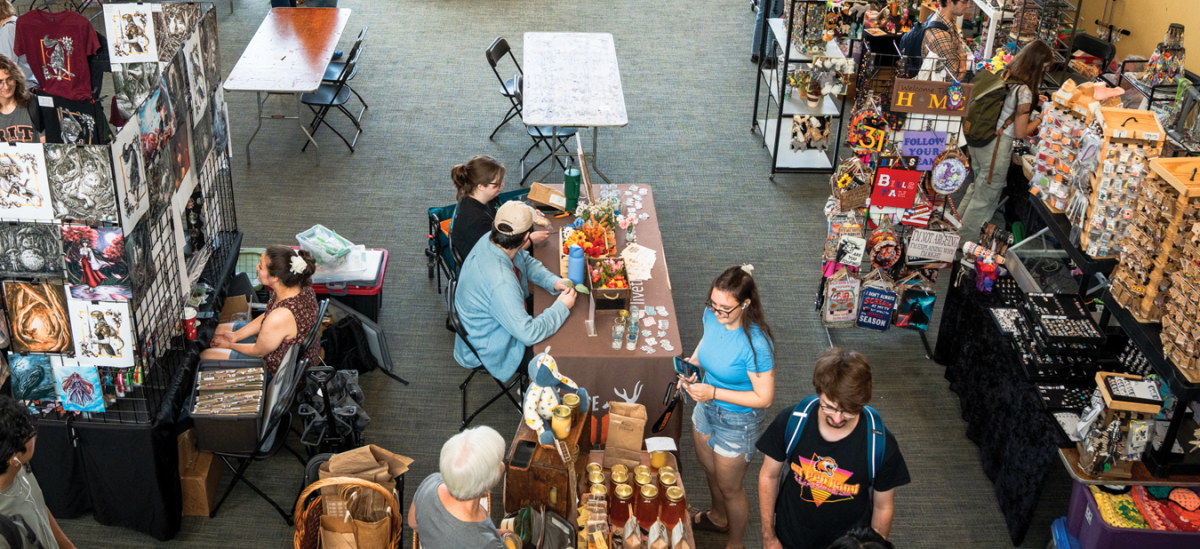
In past years, passersby in the SAU would often see vendors selling various merchandise to students, from keychains to art to crystals. This semester, RIT has made changes to the non-student-affiliated vendor program, reducing the number of events to three Fridays per semester: Sept. 4, Oct. 9 and Nov. 20.
In past semesters, vendors would rotate through the Student Alumni Union throughout the week. Some days, there would be arts and crafts; on others, there would be posters, clothes and a variety of other goods. Not only did it present an opportunity for vendors to appear frequently, but it also allowed them to build connections with students and keep in touch with the community around them.
On Aug. 20, artist and vendor AvongaleArt posted on Instagram about RIT’s changes to the program, noting that it had previously been possible weekly. She also mentioned that she would unfortunately only be able to attend the sales on Sept. 4 and Oct. 9.
Soon after, a PawPrint petition was submitted regarding the changes. The petition has since reached over 300 signatures, exceeding the 200 required to be sent to committee. It explained that vendors are something that students look forward to — especially students who cannot reliably travel off campus. The petition was charged to the Clubs, Policy and Wellbeing committee on Sept. 4.
AvongaleArt’s post also mentioned that she often looked forward to visiting RIT, because she enjoys talking with students. “It’s heartbreaking this is all coming to an abrupt end because of a decision we vendors had no say in, despite this heavily affecting our livelihoods,” she said.
She mentioned that when she raised concerns, she was told that only students could give feedback regarding the changes.
When asked for comment, Assistant Director for Campus Life Facilities Jackie Zysk said that the changes were made in response to an assessment project conducted the previous year. The consensus was that students enjoyed having vendors on campus, but wanted to see more variety.
“One challenge with our previous model is that vending schedules are finalized before the semester begins, which makes it difficult to accommodate new vendors who express interest later in the term,” Zysk explained. “By the time the next semester arrives, those vendors are often no longer available or interested in participating.”
She also expressed that student enthusiasm regarding the new vending fair model led to the event “exceeding expectations,” expressing interest in continuing the model going forward.
“Looking ahead, I hope we can build on that enthusiasm by creating more opportunities for students to play an active role in the vendor selection process, helping ensure the program continues to reflect their interests and needs.”