College hazing horror stories are universal. Many students have heard of someone hurt because of an initiation gone wrong. However, not all hazing is easy to identify — and even seemingly mild versions can cause lasting harm.
What Is Hazing?
Hazing is an initiation ritual conducted by an organization that risks one or more participants’ physical and/or mental health — regardless of their consent to that risk. A one-size-fits-all example is difficult, as hazing presents itself in a number of ways. Among them are concerns as serious as physical assault and sexual violence, as allegedly innocent as drinking games among 21+ students and everything in between. However, hazing itself is banned within RIT’s Code of Conduct and illegal under New York State law. Hazing in the first degree is a class A misdemeanor carrying a sentence of up to a year in prison or a $1,000 fine, and common hazing activities often are illegal themselves.
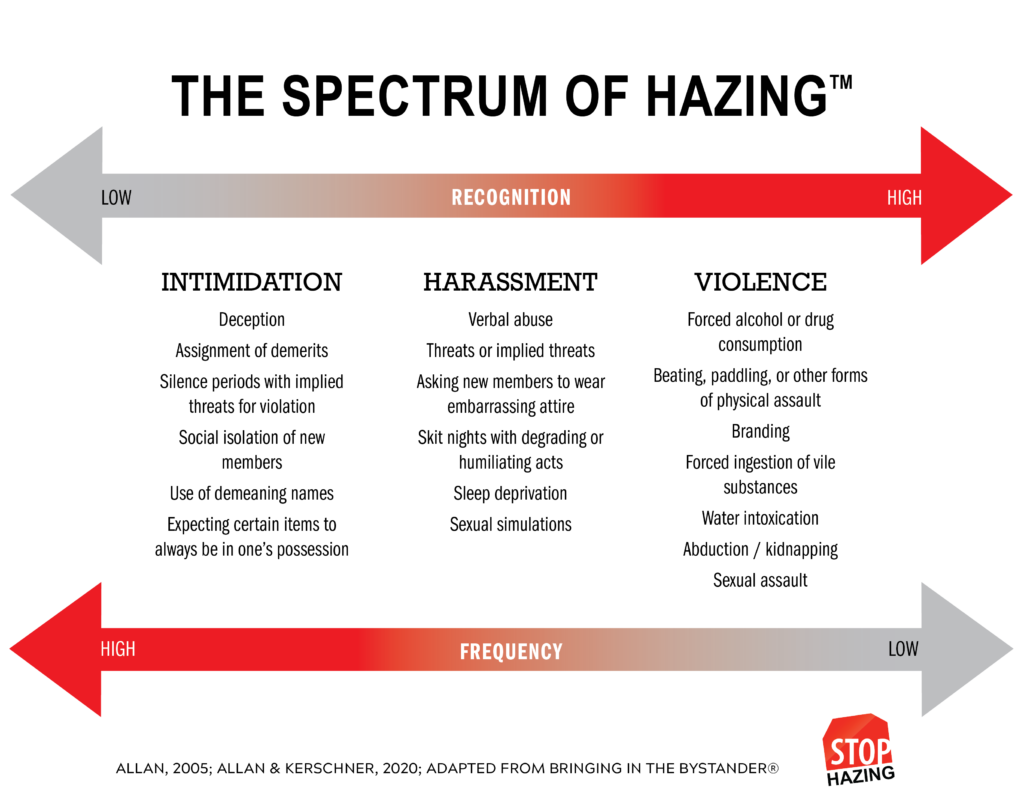
Hazing can be difficult to identify due to the “spectrum of hazing,” a concept described on Stop Hazing’s official website. While violent tactics are easy to pinpoint, harassment and intimidation tactics — such as requiring initiates to perform embarrassing tasks, expecting them to keep an object in their possession nonstop or subjecting them to repeated isolation— often go unnoticed. While approximately 55% of individuals involved in college organizations experienced hazing, only about 10% recognized it as such, according to a 2008 study cited by the Hazing Prevention Network.
Hazing frequently overemphasizes the power dynamics at play. Initiates must prove themselves — often to their own detriment —to earn their place in the organization. In some scenarios this can be fun to participate in; hazing may build stronger interpersonal bonds through shared trials and establish an initiate’s commitment to their future organization. However, any hazing tactic, even the most benign, is harmful to participants’ wellbeing.
The Issues With Hazing
Physically abusive hazing is the easiest to identify, as the injuries left behind are undeniable consequences.
Other hazing methods are more subtle. Unequal power dynamics mean one person’s negative behavior can sour an entire situation. A drinking game is fun until peer pressure causes alcohol poisoning. Doing an embarrassing activity with peers can be a great bonding experience until a thoughtless comment turns teasing into degradation. While learning to cope with negativity can be a healthy part of life, pressure to gain popularity can lead individuals to endure abuse and compromise their own boundaries for the promise of inclusion.
Sunk-cost fallacy, or escalation of commitment, can be hard to ignore as well — if one has already put up with so much pain, is it not worth it to bear the burden to the end in order to receive the reward? This mentality is often how hazing rituals convince initiates to partake in increasingly dangerous activities while convincing them that they must like the group more than they had previously thought in order to endure the struggle. These psychological impacts behind hazing are explored in a 2011 study from the Center for Anthropology at University of California’s Department of Anthropology.
A survey of over 11,000 students cited by the Hazing Prevention Network indicated that 65% of students did not enjoy the promised increase in group unity after hazing. More than 75% felt no sense of accomplishment afterward. Not only does hazing not foster positive sentiments, it can actually achieve the opposite. Hazing can quite frequently adversely affect mental health. Even mild hazing is often associated with mental health issues — depression, anxiety and posttraumatic stress disorders chief among them — that persist long after hazing concludes. StopHazing states 95% of students who experience hazing do not report it, but every student experiencing hazing is affected by it in some way.
142 of 182 hazing deaths recorded by hazinginfo.org occurred in the age range of 16-25 years old. According to a 2022 Columbia University study, young adults aged 18-25 have a higher rate of psychiatric disorders than older adults, meaning hazing deaths are occurring in an already vulnerable population. At least seven deaths by suicide have been linked to hazing since 2000, according to a database compiled by HazingInfo. This does not account for cases in which peer pressure, group dynamics and the lingering effects of hazing were not admitted causes. Hazing can cause or can take advantage of mental health issues or disorders and cause repercussions felt years down the road.
Hazing Prevention at RIT
If you believe that you or someone you know is being subjected to hazing, RIT has a number of resources available. Incidents can be reported to Public Safety or the RIT Ethics and Compliance Hotline. Additional questions can be directed to the Center for Campus Life, Fraternity and Sorority Life or the Center For Student Conduct and Conflict Resolution. RIT’s Hazing Prevention page offers a list of resources for students to discuss sensitive problems in a confidential, secure manner. Hazing is never an acceptable practice, and there is support.