Discord is a popular social media platform that has become the go-to space for Gen Z and RIT students alike to video call, send instant messages and, most recently, ignite a revolution. After several days of protests across the country, Nepalese youth succeeded in overthrowing their government. Not only was Discord used to aid this revolution, but it also served as a forum to organize Nepal’s new government.
Nepal has long been one of the poorest and politically unstable countries in Asia, with these conditions affecting the working class the most — particularly its youth. According to the Atlantic Council, over 60% of Nepal’s population is under 30, yet they face unemployment rates as high as 20%. Years of built-up frustration amongst the Nepali working-class youth ultimately fueled the revolution.
According to the Canadian Broadcasting Corporation (CBC), protests began when Nepalese youth began calling out the children of the ruling elite in Nepal. These children, pejoratively referred to as “nepo babies”, were criticized for flaunting their wealth while the working class starved. These posts angered the working-class youth, who started an online trend condemning the corruption. In response, the Nepali government promptly banned 26 social media platforms.
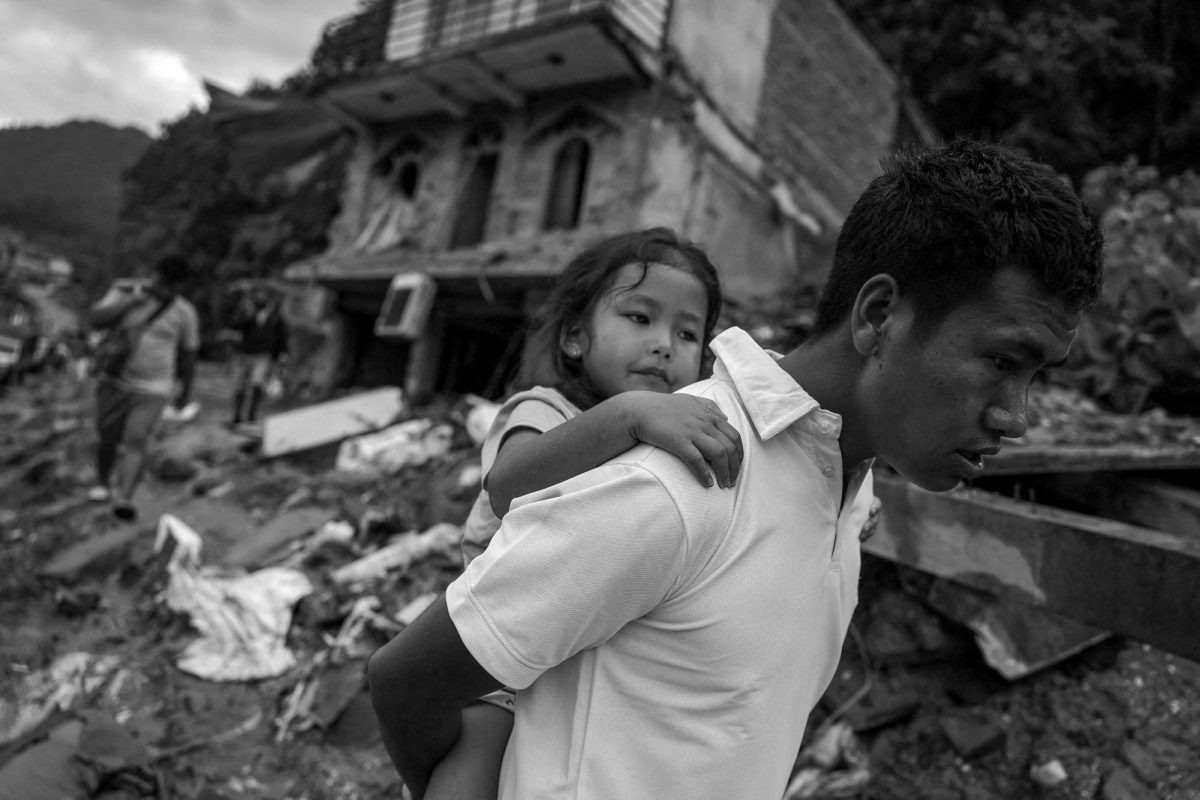
The social media bans proved to be the breaking point for Nepalese youth. Bursts of unorganized anti-corruption protests broke out across the country. Protests grew bigger and more violent over time, with several government buildings being burned down, including the Parliament, the Supreme Court, lower courts and the anti-corruption commission building. These events inspired a wave of arson attacks on other government-owned buildings across the country.
Eventually, the prime minister’s home was broken into by protestors, who assaulted him and his spouse before setting his home on fire. The Prime Minister and the rest of the Nepali ruling class grew fearful of their safety and fled the country. Following this, the young generation seized power, overthrowing the standing government on Sept. 9.
Social Media’s Role in Youth Activism
Amidst the social media bans and protests, one social media platform was an instrumental tool for mobilizing protests: Discord. According to the New York Times, more than 100,000 people were involved in the Discord discussions, holding spirited discussions on their outlook for Nepal.
To better understand the student perspective on what happened in Nepal, Reporter interviewed Michael (who requested not to include his last name for privacy reasons), a fourth year cybersecurity student at RIT from India. As president of several campus clubs, including The Wordsmiths and Dangerous Text Society, Michael relies heavily on Discord to advertise meetings and open communication lines between members. During the discussion, Michael revealed his connections with several Nepali activists, as well as his involvement in the Discord server used to elect Nepal’s interim prime minister.
When asked about Discord’s role in the Nepali uprising, Michael expressed pride in Generation Z’s ability to organize, but wondered what the future might hold for Nepal.
“I’m particularly proud as well as happy that they were [mobilizing]..And then the way it worked out,” Michael stated, “But now what? You took over the government, you burnt it down, now what? We know a lot about the change we want; we don’t know a lot about how to run a government.”
Following the uprising, the next stage in the governing process was determining who would become Nepal’s new leader. Over a Discord call, the 154,300 members of the server voted for Sushila Karki to become Nepal’s new interim prime minister. Karki, a former chief justice of Nepal’s Supreme Court, is known for her opposition to the government’s corruption. Karki makes history as the country’s first female prime minister and the first prime minister in the world to be elected over Discord.
While Discord was the immediate vessel to drive political change, Michael regards it simply as a tool, viewing the people who led the revolution as the true architects of change.
“Somebody wrote the Declaration of Independence with a pen…It’s not the pen that changed the world. It’s the person,” Michael noted. “Discord did nothing. Discord didn’t give you any special features. It’s just, by chance, one of the apps which wasn’t banned in the country…So I understand the irony of… a gaming application being used here, but it could have been any other app.”
The Future of Political Activism for RIT Students
What happened in Nepal is not an isolated incident; according to the CBC, Nepal is the third country in South Asia to have its government overthrown by Gen Z, and it doesn’t appear to be the last. Nepal’s revolution is a testament to this generation’s ability to produce political change — both online and offline.
The situation in Nepal has demonstrated that social media can now be used to encourage people to speak out, initiate conversations about relevant issues and bring awareness to their cause to the largest audience in the world: the Internet.
Social media has made political participation more accessible for college students, making it easier for RIT students to become more involved with their government. For the average RIT student, social media can act as a gateway to political activism, encouraging more students to speak out and bring light to issues impacting the RIT community.
“See, whatever is happening in Nepal has happened for centuries in different countries. So it’s not like something new…What they can take away is that, hey guys, if you want some change, you might have to take it in your own hands and not sit at home,” Michael said.